



Why Do Many CLM Platforms Struggle with Contract Lifecycle Management Challenges?
Most CLM platforms give legal teams visibility into where agreements are stored. But when contract management challenges emerge — like when a regulator demands proof of compliance, or operations needs supplier terms immediately, or finance asks about upcoming renewals — knowing where contracts live isn't enough.
Legal teams implement contract repositories believing they've solved the visibility problem because every agreement gets uploaded, tagged, and stored centrally. Then, a regulator calls asking about vendor compliance provisions, and legal realizes finding the contract and knowing what it says are two entirely different challenges.
This blog explains how regulatory pressure, operational dependencies, and financial obligations shape what contract intelligence teams actually need, and why many CLM platforms don't get it right.
When Regulatory Audits Demand Compliance Proof
Large organizations manage an average of 19,000 contracts annually, according to the 2021 EY contracting report. At that volume, auditors don't want proof that you checked fifty contracts. They want evidence you have systems ensuring all relevant agreements comply and that you'd catch gaps before they do.
Basic contract repositories solve document location but not systematic compliance reporting. Compliance officers can search for "breach notification" and identify which vendor agreements contain that language. What they can't easily do is understand what those provisions actually say — whether notification timelines are 48 hours or 30 days, how language varies across agreements, which terms fall outside acceptable ranges. Proving systematic compliance means generating reports that compare provisions across the portfolio and demonstrate patterns, not just locating individual contracts.
According to the 2025 EY General Counsel Study, 87% of legal departments struggle with data-related challenges because information is disorganized or held in disconnected systems. For regulated businesses, this fragmentation means audit prep becomes a manual contract review exercise: identifying which agreements lack required language, which vendors haven't updated terms to current standards, where compliance gaps exist.
Platforms like IntelAgree let teams configure custom metadata fields around the specific regulatory provisions they need to track, like breach notification timelines, data processing terms, and security audit rights. Once contracts are tagged with these fields, teams can generate systematic compliance reports showing which agreements contain required terms, which don't, and how provisions compare across the portfolio without reading each contract individually.
When Negotiations Lack Historical Context
Let's say legal receives a services agreement with a $2 million liability cap. Is that reasonable? Without knowing what the company has accepted from similar vendors, there's no frame of reference. Legal either accepts the terms and hopes they're favorable, or delays the deal searching through old contracts to understand whether $2 million is standard, generous, or problematic.
Contract repositories let legal locate existing vendor agreements and review individual terms. What they can't easily do is answer comparative questions that drive negotiation decisions: What liability caps has the company accepted from similar vendors? Has legal ever agreed to unlimited indemnification, and under what circumstances? What payment terms does the business typically negotiate? Building this context by reading contracts individually extends negotiations and creates friction with business teams who want deals closed.
Without visibility into existing terms, legal builds their own sense of what's "reasonable" based on whichever contracts they happened to review recently. Those individual reference points don't always align, creating variation in how similar vendor relationships get negotiated.
IntelAgree, for example, lets teams build searchable clause libraries organized around the terms that typically get negotiated: liability caps, indemnification provisions, payment terms, IP ownership, warranty limitations. Legal can search existing contracts to see what the company has historically accepted and generate reports comparing terms across similar vendor types. Plus, teams with a Saige Assist subscription can also use AI to identify relevant precedent language and get contract advice without reading every agreement, turning institutional knowledge into accessible intelligence that supports faster, more consistent negotiations.
When Financial Deadlines Create Forecast and Billing Risk
If nobody maintains a consolidated view of contracts, answering a straightforward question like, "What's our complete contractual relationship with this vendor? requires pulling data from multiple systems, hoping nothing was missed, and acknowledging the answer is probably incomplete.
According to the 2021 KPMG study, contracts suffer more than 9% value leakage on average. Whether that leakage connects to fragmented contract data or other causes, the inability to see complete contractual obligations across the business creates real exposure. Legal can't assess total liability when indemnification clauses exist in agreements stored across five different systems. Finance can't project accurate spend when payment commitments scatter between procurement platforms, sales tools, and contract repositories. Risk management can't evaluate vendor dependencies when pieces of the vendor relationship live in systems they don't access.
Centralized contract management solves this by making one system the authoritative source for every agreement the company signs. When all contracts live in the same place, questions about total exposure or enterprise-wide commitments finally have definitive answers instead of qualified guesses assembled from whatever systems someone remembered to check.
Why Many CLM Platforms Often Fall Short in Addressing Challenges
CLM vendors often emphasize universal features: centralized storage, workflow automation, electronic signatures. While these capabilities are critical, they don't address the fundamental challenge of whether teams can extract the specific intelligence their business model demands when circumstances create pressure.
According to the 2021 EY study, 99% of organizations report managing current contracting workloads as a challenge. Volume and complexity overwhelm legal teams everywhere. But what creates that pressure — whether it's regulatory monitoring requirements, operational dependency management, negotiation consistency, or financial obligation tracking — determines which contract intelligence actually matters to the business.
Stakeholder confusion about contract ownership makes consolidation nearly impossible. The same EY research revealed that 59% of legal departments believe they lead the contracting function, while 56% of contracting teams and 39% of business development professionals claim the same responsibility. Multiple groups thinking they're in charge means no one actually is, so approvals stall, terms get negotiated inconsistently, and accountability disappears.
Building CLM Around Actual Contract Lifecycle Management Challenges
Effective contract management starts with understanding which pressure points create urgency in your business.
Organizations facing regular regulatory audits need searchable repositories with robust audit trails and the ability to pinpoint specific regulatory language immediately. Businesses with critical operational vendor dependencies need rapid access to delivery terms, liability provisions, and termination rights when disruptions occur. Legal teams negotiating without historical context need clause libraries and comparative reporting to ensure consistency. Companies losing revenue to missed renewals and unfavorable auto-renewals need systematic tracking of financial obligations and renewal windows.
Platforms like IntelAgree allow teams to configure metadata extraction based on terms and clauses that matter to their specific needs. A team managing regulatory compliance can train the system to recognize and surface HIPAA provisions, third-party risk language, or data processing terms. A procurement team managing supplier relationships can configure searches around delivery obligations, force majeure clauses, and liability caps. Legal teams can build searchable clause libraries organized around liability caps, indemnification provisions, and payment terms to support negotiation consistency.
The 2025 ACC CLO Survey found that 44% of chief legal officers plan to adopt new legal technology this year. Whether those implementations succeed depends less on the platform's capabilities and more on whether teams understand their own pressure points well enough to configure solutions around them.
Want to see what contract intelligence looks like when it's built around your actual contract lifecycle management challenges? Schedule a demo with IntelAgree.
Frequently Asked Questions:
Question: Do all businesses struggle with the same contract lifecycle management challenges?
Answer: No. While volume and post-signature monitoring affect most organizations, what creates actual pressure varies significantly. Businesses facing regular regulatory audits need different capabilities than businesses managing critical operational dependencies, negotiating without historical context, or tracking financial obligations across contracts. The solutions that work for one pressure point often fail to address the core problems of another.
Question: How do requirements change CLM needs?
Answer: Regulatory frameworks determine which contract terms require continuous monitoring and how quickly teams need to surface specific provisions. Businesses under regulatory scrutiny typically need more robust audit trails, compliance reporting capabilities, and clause-specific search functionality. The specific regulations vary, but the underlying need for rapid regulatory visibility remains constant across regulated businesses.
Question: How does negotiation intelligence improve contract consistency?
Answer: Without visibility into historical terms, legal teams make independent judgment calls during every negotiation, creating portfolio inconsistencies that create downstream risk. Negotiation intelligence provides searchable access to what the company has previously accepted — liability caps, payment terms, indemnification language — allowing legal to negotiate from informed positions rather than memory or recent examples. This consistency strengthens negotiating leverage and reduces business friction from delayed deals.
Question: Can one CLM platform handle different contract lifecycle management challenges?
Answer: It depends on the platform's configurability. Some CLM solutions offer rigid workflows that work well for one contract lifecycle management challenge but poorly for others. More flexible platforms allow organizations to configure metadata extraction, approval workflows, and search parameters based on actual business needs. The key is ensuring the system can accommodate different contract intelligence requirements without forcing every team into identical processes.
Question: What causes revenue leakage in contract management?
Answer: Revenue leakage often stems from missed renewal opportunities, auto-renewals at unfavorable terms, failure to track payment obligations, or inability to enforce favorable pricing terms. Without systematic visibility into renewal dates, payment schedules, and pricing clauses, organizations lose money not because contracts are poorly negotiated, but because teams can't access financial intelligence quickly enough to act strategically.
Additional Reading
 Your Agreements Hold the Answers — But Are You Asking the Right Questions? — Explains how AI-powered contract analysis surfaces hidden risks and revenue opportunities by transforming static documents into actionable business intelligence.
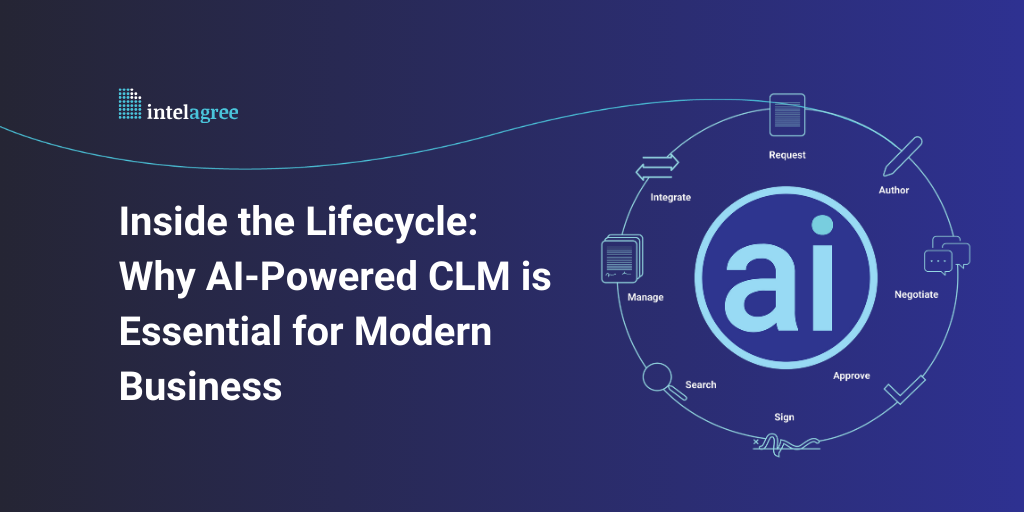 Inside the Lifecycle: Why AI-Powered CLM is Essential for Modern Business — Walks through how AI transforms each stage of the contract lifecycle from drafting through post-signature management to reduce delays and compliance risk.
 Why "Good Enough" Contract Management is No Longer Good Enough — Identifies the hidden costs of basic CLM systems and provides a practical roadmap for evaluating and upgrading to enterprise-grade contract management platforms.